
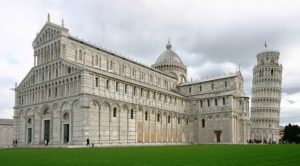
 The headquarter of the M.Sc. is in Pisa, a city of over 200,000 residents in its metropolitan area, located in Tuscany, central Italy, close to other historical cities like Lucca, Florence, Siena as well as country-side, beaches and mountains. Pisa is not only a welcoming and liveable city, frequented by tourists for its natural beauty and its monuments but also an ideal city for students. The Pisa University System, comprising the University of Pisa, the Scuola Superiore Sant’Anna and the Scuola Normale Superiore, is acknowledged to be one of the most prestigious centers of academic studies and research in Europe, and it promotes a unique model of multidisciplinary research and education.
Three different Institutions are involved in the M.Sc. in Bionics Engineering: (1) the University of Pisa (UNIPI), which is responsible for students’ enrolment and administrative procedures. In particular, UNIPI is involved with the Department of Information Engineering; (2) the Scuola Superiore Sant’Anna of Pisa (SSSA), which is responsible for the students’ selection procedure and that co-delivers the degree title, together with the University of Pisa. In particular, SSSA is involved with The BioRobotics Institute; and (3) the IMT School for Advanced Studies (IMT), which participates in delivering the courses.
 The teaching staff of the Department of Information Engineering consists of 78 professors and researchers. Research activities are relevant to the following areas: Biomedical Engineering, Electromagnetics, Electronics, Computer Engineering and Communications. 34 staff members belong to the Computer Engineering Section, which is housed in the main building of the School of Engineering in Largo Lucio Lazzarino, while the remaining 44 staff members carry out their activities in the offices and laboratories of via Caruso. The main ongoing research activities concern electronics, applied electromagnetism, telecommunications, automation and robotics, computer science & engineering and biomedical engineering.
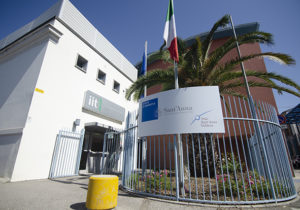 The BioRobotics Institute intends to pursue new frontiers in engineering, by blending science and technology. The Institute has built and consolidated a vast wealth of knowledge and expertise in the fields of wearable technologies, artificial organs and prostheses, medical robotics and regenerative medicine, collaborative robotics, bioinspired robotics and neuroscience robotics. It also addresses the ethical, legal, social and economic implications related to these research lines.
 IMT is a public research institution and a selective graduate school located in Lucca. The acronym IMT stands for “Institutions, Markets, Technologies.” Its main campus is located in the San Francesco Complex within the historic city walls of Lucca. The IMT School promotes the full integration of research and education.